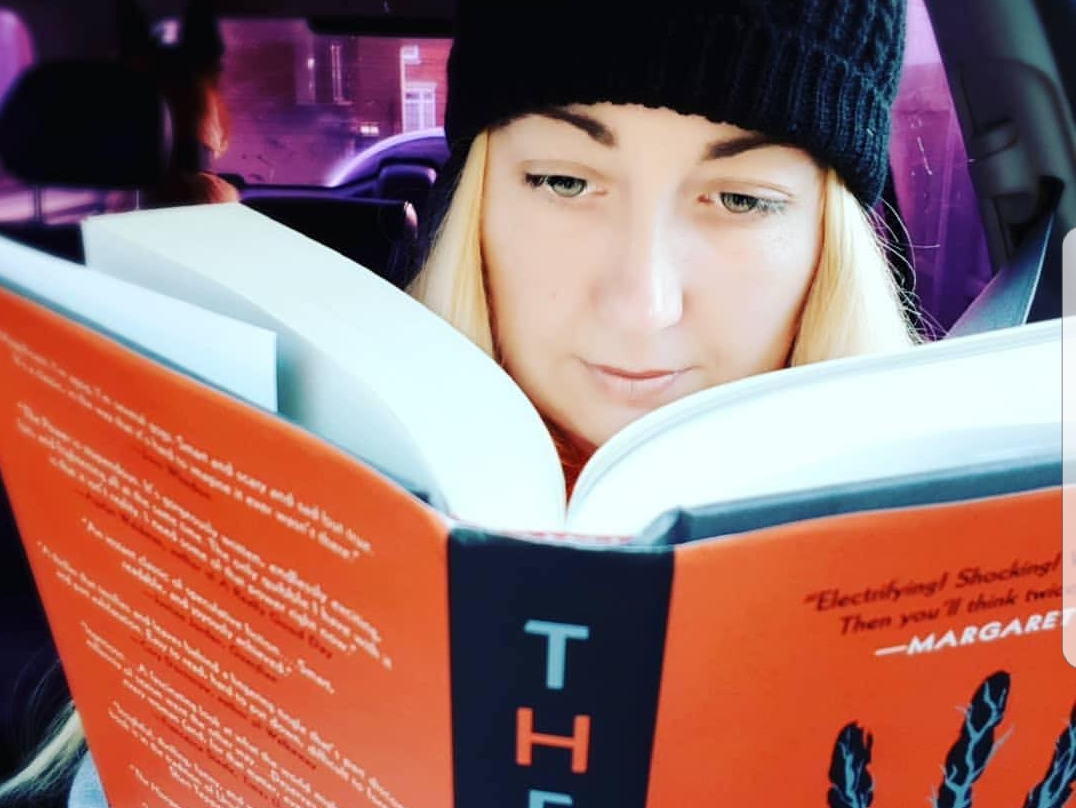
We all have our reading quirks. Some of us are loyal to thrillers, others swear by romance, and a few brave souls will read anything with a dragon on the cover. But what really drives our book choices? Is it the genre, the story, the author or are we just victims of a well-timed BookTok recommendation and a tempting 99p Amazon deal?
I’ve been thinking about this a lot lately, especially after realising that I’ve been introduced to genres I never thought I’d enjoy not by the story itself, but by the author behind it, and also perservered with whole series because of the author rather than just letting it go.
Take Rebecca Yarros, for example. Known for her emotionally charged romances, she surprised many readers (myself included) with Fourth Wing, a fantasy novel that exploded across social media. I didn’t pick it up because I was craving dragons or battle schools—I picked it up because Yarros wrote it. And suddenly, I was knee-deep in a genre I’d avoided for a while thans to ACOTAR and ToG, loving every minute of it.
Then there’s Patricia Cornwell, a name synonymous with forensic crime fiction. Her Kay Scarpetta series is practically a rite of passage for crime readers. But Cornwell has also dabbled in other genres, including historical fiction and even techno-thrillers. Did I follow her into those genres because I was curious about the stories? Not really. I followed her because I trusted her voice, her pacing, and her ability to make me care about the characters.
And let’s not forget Chris Brookmyre, who writes everything from satirical crime to sci-fi thrillers and even publishes under the pseudonym Ambrose Parry for his historical fiction collaborations. If you’ve read Brookmyre’s sharp, witty crime novels, you might be surprised to find yourself immersed in Victorian medicine and murder. But again, it’s not always the genre that pulls you in it’s the author’s reputation, their style, and the promise of a good read.
So what does this say about us as readers?
It suggests that genre might not be the gatekeeper we think it is. We often say things like “I don’t read fantasy” or “historical fiction isn’t for me,” but then we find ourselves hooked on a story that ticks all the boxes we thought we didn’t like because the author made it work.
I recently had this experience with The Last Wizard’s Ball by Charlaine Harris. I went in expecting a futuristic mystery, only to discover it was set in the lead-up to World War II. I’d misunderstood the time placement entirely, for the whole series. And while the historical setting was cleverly done, I didn’t overly enjoy the WW2 element. It felt like some of Harris’s characters ones I’d grown attached to were let down by the shift in tone and context. But I kept reading, not because the story appealed to me, but because Harris wrote it. Her name on the cover was enough to earn my trust.
Which brings me to another point: do we choose books by their covers, or by their authors?
Covers are undeniably powerful. A moody forest, a glittering ballgown, a neon title—these things catch our eye and spark curiosity. But in the age of digital reading, where thumbnails replace physical bookshelves, the author’s name often carries more weight than the artwork. If I see “Rebecca Yarros” or “Patricia Cornwell” on a cover, I’m already halfway to clicking “Buy Now.”
And then there’s the influence of BookTok and Amazon deals. A book trending on TikTok can go from obscurity to bestseller overnight. Sometimes it’s the aesthetic dark academia, cosy fantasy, enemies-to-lovers that draws us in. Other times, it’s the sheer volume of hype. We don’t want to miss out. And when that same book is available for 99p on Kindle? Well, resistance is futile.
But here’s the twist: those impulse buys often introduce us to genres we wouldn’t have explored otherwise. A discounted dystopian romance might lead to a full-blown obsession with speculative fiction. A viral fantasy might open the door to epic sagas and magical realism. In these cases, it’s not the story or the author that pulls us in, it’s the moment, the mood, the algorithm.
So where does that leave us?
It leaves us wonderfully unpredictable. We might think we’re loyal to certain genres, but our reading habits are shaped by a mix of trust in authors, visual appeal, peer influence, and digital convenience. And that’s not a bad thing. It means we’re open to discovery. It means we’re willing to be surprised.
Maybe we don’t choose the story. Maybe the story, through its author, its cover, its timingchooses us.
So the next time you find yourself reading something completely outside your usual comfort zone, ask yourself: was it the genre that drew you in? Or was it the author, the buzz, the bargain?
And if you’re still not sure, just check your Kindle library. If it’s full of 99p deals and BookTok favourites, you’re in good company.
 One More Chapter